


Last updated: 28 October 2026
What is SIL in the NDIS? Supported Independent Living (SIL) is NDIS funding for support workers who help or supervise you at home, 24 hours a day, usually in a home you share with other participants. It pays for the people, not the house. SIL is meant for people with higher support needs who need someone around at all times, and the NDIA only funds it when the evidence shows that.
Key takeaways
- SIL funds support workers in your home around the clock. It does not pay for rent, groceries, utilities or the home itself.
- It suits adults who need hands-on help for at least 8 hours a day and some level of support for the rest, including overnight.
- Most SIL is shared, for example one worker supporting two housemates. One-to-one SIL is only funded in limited situations.
- From 1 October 2026, only providers that are registered with the NDIS Commission (or applied before that date) can deliver SIL.
- If you only need a few hours of help a day, drop-in support or an individualised living option may suit you better.
Contents
- What is SIL in the NDIS?
- What SIL pays for and what it doesn’t
- Shared and individual SIL arrangements
- Who qualifies for SIL?
- How SIL is funded and claimed in 2026-27
- What has changed for SIL in 2026
- What a typical week in a SIL home looks like
- Signs SIL might not be right for you
- SIL with Skillwise in Western Sydney
- Frequently asked questions
What is SIL in the NDIS?
SIL is funding for a support worker to help or supervise you at home, 24 hours a day, 7 days a week (NDIS: What is SIL). The aim is for you to build skills and live as independently as you can.
People often mix SIL up with the house. SIL is the staff. Specialist Disability Accommodation (SDA) is a specially built home for people with very high needs, and some people have both in their plan (NDIS: What is SDA).
If you only need a few hours of support, or you direct and roster your own workers, that isn’t SIL.
What SIL pays for and what it doesn’t
SIL pays for support workers’ time in your home. Everyday household costs come out of your own income, such as a pension or wages.
The NDIA’s SIL guideline (dated 7 July 2026) lists what’s in and out. This table puts it side by side (NDIS SIL Guideline).
| Usually covered by SIL | Not covered by SIL |
|---|---|
| Personal care, like showering and dressing | Rent, board or lodging |
| Help with, and skill-building in, cooking and cleaning | Groceries and food |
| Medication support | Gas, electricity, water, phone and internet |
| Supervision and keeping you safe | Vehicle costs and holidays |
| Following your behaviour support plan | The home itself (SDA is funded separately) |
| Support at medical appointments | Regular community outings (funded in a different part of your plan) |
That last row catches people out. A weekly art group or day program usually comes from a different budget. See our page on community participation support in Western Sydney.
Shared and individual SIL arrangements
Most SIL is shared. The NDIA usually funds SIL when you share support with other participants in the same home, and it does not fund empty rooms in a shared house (NDIS SIL Guideline).
The ratio is how many workers support how many people, and it changes across the day. Here are ratios you’ll commonly see on a roster of care.
| Ratio | What it means | When it’s common |
|---|---|---|
| 2:4 | Workers shared across the household | Quieter times, like mid-afternoon at home |
| 1:2 | One worker supporting two housemates | Mealtimes, evening routines |
| 1:1 | One worker for one person | Personal care, or where risk is high. Funded only in limited situations |
| Sleepover | Worker sleeps on site and wakes if needed | Overnight, if you need up to 2 hours of help a night |
| Active overnight | Worker stays awake all night | If you regularly need more than 2 hours of help overnight |
You get a say in who you live with. In our experience, the housemate match matters as much as the ratio.

Who qualifies for SIL?
SIL is generally for adults aged 18 or over with higher support needs who need someone with them at all times, including overnight. The NDIA must also decide it’s reasonable and necessary and better value than other home and living options (NDIS SIL Guideline).
The NDIA’s public page gives a simple test. SIL may suit you if you need a support worker to be with you 24 hours a day, help you with daily activities for at least 8 of those hours, and give some help or supervision for the rest (NDIS: What is SIL).
What evidence the NDIA looks at
SIL eligibility comes down to evidence about what you can and can’t do day to day because of your disability. The guideline lists the sources it relies on.
| Evidence | Who usually provides it |
|---|---|
| Your own account of daily life and goals | You, your family, guardian or carers |
| Functional capacity assessment | Occupational therapist or other registered allied health professional |
| Behaviour support reports | Behaviour support practitioner |
| Roster of care (if available) | Your SIL provider |
| Home and living needs assessment | Requested or funded by the NDIA if needed |
The functional assessment is where most requests are won or lost. A report describing a real week, 2am wake-ups and bad days included, carries more weight than a list of diagnoses.
How SIL is funded and claimed in 2026-27
SIL funding is worked out from a roster of care and priced using the NDIS Pricing Schedule 2026-27. From 1 July 2026, SIL has its own support category, 0138, separate from general assistance with daily life (NDIS: SIL claims and payment changes).
The roster shows your hours, ratios and overnight support across a typical week. It informs the funding, but the NDIA makes the final call.
This table shows some of the national hourly price limits for SIL in 2026-27. Providers can charge less, but not more (NDIS Pricing Schedule 2026-27).
| Support item | Item number | National price limit |
|---|---|---|
| SIL, standard, weekday daytime | 01_801_0138_1_1 | $73.58 per hour |
| SIL, standard, Saturday | 01_804_0138_1_1 | $103.54 per hour |
| SIL, standard, Sunday | 01_805_0138_1_1 | $133.50 per hour |
| SIL, high intensity, weekday daytime | 01_811_0138_1_1 | $79.60 per hour |
| SIL, night-time sleepover | 01_832_0138_1_1 | $311.79 each |
| SIL, weekly | 01_821_0138_1_1 | No set price (agreed amount) |
High intensity rates apply when workers need extra skills, such as for unstable seizures or respiratory support. SIL sits in your Core budget, and our guide to using your NDIS Core supports funding explains how it works.
What has changed for SIL in 2026
The biggest change is that every SIL provider must now be registered with the NDIS Commission. Your plan and funding don’t change, but your provider’s status matters (NDIS: Mandatory SIL registration).
Here’s the timeline as it stands.
| Date | What changed |
|---|---|
| 1 July 2026 | New SIL claim code (0138) and new SIL practice standards started |
| 1 October 2026 | Only registered providers, or those who applied by this date, can deliver SIL |
| 1 October 2026 | Budgets for community participation (50%) and daily living skills (10%) start reducing on new or reassessed plans |
| 1 February 2027 | Those budget reductions extend to other plans at renewal |
The budget cuts don’t apply to SIL itself. The government says there are no changes to budgets for critical supports, and that people needing continuous 24-hour care will keep receiving it (Department of Health, Disability and Ageing). Your outings and skills funding may still shrink, so check those lines in your next plan. The NDIA is still updating its guidance, so details may shift.
A tip from our team: ask any SIL provider for their NDIS Commission registration number and check it yourself on the Commission’s provider search. It takes two minutes.
What a typical week in a SIL home looks like
A SIL week looks a lot like any shared household’s week, with workers rostered around each person’s routine and help on hand day and night.
Weekday mornings are the busiest: showering, dressing, medication and breakfast, then people head to work, a day program or TAFE. Afternoons are often quieter, so ratios may drop.
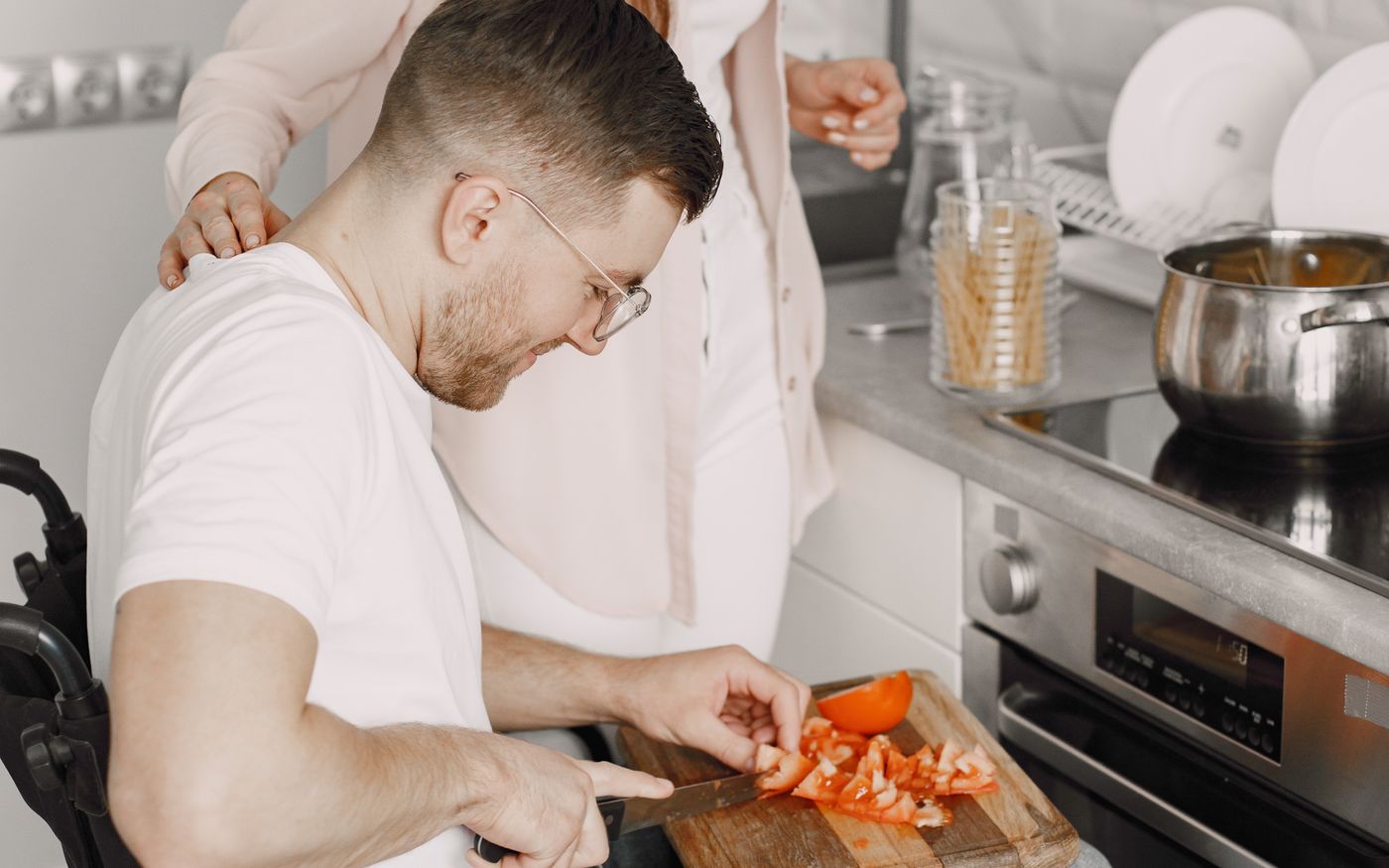
Evenings bring cooking, dinner and getting ready for bed. Good workers do things with you rather than for you, so you might chop the vegetables while they watch the stove. Overnight, a worker sleeps over or stays awake.
Weekends leave room for chores, shopping and family visits. For more on how SIL fits next to drop-in and other daily living help, see our guide to NDIS assistance with daily life.

Signs SIL might not be right for you
SIL probably isn’t the right fit if you only need a few hours of help a day or want to manage your own workers. Another home and living support is often a better match.
The NDIA points people elsewhere if they live alone and SIL doesn’t meet their needs, live with people who aren’t participants, or want a self-directed arrangement (NDIS: What is SIL).
Drop-in support
If you can manage most of the day yourself, a support worker can visit at set times for personal care, meals or household tasks.
Individualised living options (ILO)
ILO is built around you, such as living with a host or a supportive housemate. The NDIA says it may suit people who need at least 6 hours of support at home a day (NDIS: What is ILO). We’ll compare SIL, SDA and ILO properly in an upcoming post.
SIL with Skillwise in Western Sydney
Skillwise is a registered NDIS provider (Registration ID 4-JRM2YF0) running SIL homes in Mount Druitt and Rooty Hill. We work with self-managed, plan-managed and NDIA-managed participants.
Our Supported Independent Living service covers shared living with 24/7 support. Locals can also read about our work as an NDIS provider in Mount Druitt and an NDIS provider in Rooty Hill.
Not sure if SIL is the right step yet? That’s normal. We’re happy to talk it through with you, your family or your support coordinator, and explain how our SIL homes work.
Call us on 0474 151 264 or send us a message.

Frequently asked questions
Does SIL pay for rent?
No. SIL only pays for support workers. Rent, board, groceries and utilities are paid by you, usually from your pension or wages. If you need a specially built home, that’s Specialist Disability Accommodation, which is a separate part of your NDIS plan with its own rules.
Can I get SIL if I live alone?
Sometimes, but it’s uncommon. The NDIA funds one-to-one SIL only in limited situations, and usually expects support to be shared. If you live alone and want to stay that way, an individualised living option or drop-in support may be a better fit for your needs.
How many hours of support do I need to qualify for SIL?
The NDIA’s guide is round-the-clock support. That means a worker with you 24 hours a day, hands-on help for at least 8 of those hours, and some supervision for the rest. Needing only a few hours a day usually points to other supports instead.
Can I keep my SIL provider if they aren’t registered?
Only if they applied to register before 1 October 2026. From that date, unregistered SIL providers who didn’t apply can’t be paid for SIL. Your plan and funding stay the same, and the NDIA can help you find a registered provider if you need to move.
Will the October 2026 budget cuts reduce my SIL funding?
No, not directly. The 50% and 10% reductions apply to community participation and daily living skills budgets, not to SIL. Government guidance says people who need continuous 24-hour care will keep getting it. Your outings or skills-building funding could still be lower in a new plan.
Support near you in Western Sydney
Skillwise is based in Rooty Hill and supports NDIS participants across the region. Read about our NDIS support in Blacktown, NDIS support in Mount Druitt, NDIS support in Rooty Hill and NDIS support in St Marys, or see all the areas we cover.