


Last updated: 7 October 2026. Prices and rules are taken from official NDIS publications, linked throughout.
Does NDIS pay for cleaning? Yes, it can. The NDIS can fund help with cleaning and laundry when your disability stops you from doing these essential household tasks yourself, and the support meets the NDIS “reasonable and necessary” criteria. It does not pay for cleaning products, end-of-lease cleans or cleaning that family or housemates could reasonably do.
This guide is for participants, families and carers in Western Sydney and across NSW who want a clear answer before they talk to their planner, support coordinator or provider. It covers what the rules say, the 2026-27 price limits, how to get household tasks into your plan, and how to use the funding well.
Key takeaways
- “Household tasks”, including cleaning and laundry, is one of the official categories of NDIS supports.
- The task must be one you can’t do yourself because of your disability, and the support must meet every reasonable and necessary criterion.
- Cleaning products, groceries, exit cleaning and standard appliances are not NDIS supports.
- From 1 July 2026, the national price limit for house cleaning (item 01_020_0120_1_1) is $60.10 per hour.
- If your needs have changed, you can ask the NDIA to change your plan. You don’t have to wait for your next reassessment.
What the NDIS says about cleaning
NDIS law sets out what the scheme can and can’t fund. The NDIA publishes this as two lists: supports that are NDIS supports, and supports that are not.
The Supports that are NDIS supports list includes a category called Household tasks. It covers “assistance with essential household tasks that a participant is not able to do themselves because of their disability”, including meal preparation and delivery, house or yard maintenance, and cleaning and laundry. A separate category, Assistive products for household tasks, covers equipment that makes cleaning, gardening or laundry easier to do yourself.
In most plans, help with household tasks is paid from the Core Supports budget under Assistance with Daily Life, which is the support category the NDIS pricing schedule uses for these items.
What is funded and what is not
Being on the list doesn’t mean every cleaning cost is covered. The Supports that are not NDIS supports list rules out everyday living costs that everyone pays, whether or not they have a disability.
| May be funded (if reasonable and necessary) | Not funded by the NDIS |
|---|---|
| A support worker or cleaner doing routine cleaning you can’t do because of your disability, such as vacuuming, mopping, bathrooms and kitchens | Groceries, including cleaning and household products |
| Laundry, and linen services where needed | Exit (end-of-lease) cleaning, pest control, bond and general damage repairs under a tenancy agreement |
| House or yard maintenance, such as lawn mowing | Standard home repairs, renovations and maintenance |
| Meal preparation and delivery (the NDIS covers the preparation and delivery part, not the food) | Standard household items and appliances, such as a washing machine, dishwasher or fridge |
| Assistive products that help you clean, garden or do laundry yourself | Pool maintenance, utility bills and other day-to-day living costs |
Source: NDIA, Supports that are NDIS supports and Supports that are not NDIS supports.

When cleaning counts as reasonable and necessary
Every NDIS support must meet all of the reasonable and necessary criteria before it can go into a plan. The NDIA’s Our Guideline: Reasonable and necessary supports (updated 27 August 2026) explains these in plain language. For cleaning, three tests usually matter most.
1. The need comes from your disability
The NDIS won’t fund cleaning because someone is busy or would rather not do it. Your planner needs to see how your disability affects your ability to clean safely or independently. Fatigue, pain, limited mobility, reduced grip strength, or difficulty planning and sequencing tasks can all be relevant, as long as they’re linked to your disability.
2. Informal supports are taken into account
The NDIA must consider what it is reasonable to expect family, carers, friends and the community to provide. If you live with other adults who can help, funding is more likely to cover the tasks that are yours, such as your own bedroom and laundry, than the whole house. The guideline also says the NDIA looks at whether relying on family is safe and sustainable, for example when a carer is ageing or unwell.
3. Value for money and real benefit
The support must be good value compared with other options, and likely to work for you. An assistive product or some skill-building may sometimes reduce how many paid cleaning hours you need over time.
2026-27 price limits for household tasks
The NDIA publishes the maximum prices it considers reasonable for each support in the NDIS Pricing Schedule 2026-27, effective 1 July 2026. These are the main household tasks items and a related skill-building item.
| Support item | Name | Unit | National | Remote | Very remote |
|---|---|---|---|---|---|
| 01_020_0120_1_1 | House Cleaning And Other Household Activities | Hour | $60.10 | $84.14 | $90.15 |
| 01_019_0120_1_1 | House or Yard Maintenance | Hour | $59.01 | $82.61 | $88.52 |
| 01_004_0107_1_1 | Assistance with Personal Domestic Activities | Hour | $61.16 | $85.62 | $91.74 |
| 01_021_0120_1_1 | Linen Service | Each | Quotable (priced by quote) | ||
| 01_023_0120_1_1 | Assistance with the cost of the preparation and delivery of meals | Each | Notional unit price ($1.00) | ||
| 15_037_0117_1_3 | Skill Development And Training including Public Transport Training | Hour | $73.58 | $103.01 | $110.37 |
Source: NDIA, NDIS Pricing Schedule 2026-27 (PDF). Prices are maximums, not set fees.
Western Sydney suburbs use the national column. Providers can charge less than the limit. The pricing schedule notes that providers must discuss any proposed changes to existing service agreements with participants, and participants must agree before the changes are made.
How to get cleaning support in your plan
If your current plan already has Core Supports funding, you may be able to use it for household tasks straight away. Check with your plan manager or support coordinator first. If it doesn’t, or your needs have changed, these steps can help.
| Step | What to do | Who can help |
|---|---|---|
| 1. Note what you can’t do | Keep a short diary for a week or two: which tasks you skip, need help with, or that leave you in pain or exhausted. | You, your family or carer |
| 2. Gather evidence | Ask your GP or allied health professional, such as an occupational therapist, to describe how your disability affects household tasks. | GP, occupational therapist |
| 3. Check your current plan | See whether existing Core Supports funding can be used flexibly before asking for a change. | my NDIS contact, support coordinator |
| 4. Ask for a plan change | Request a plan variation for small or urgent changes, or a plan reassessment if your needs have changed significantly. | NDIA (1800 800 110) |
| 5. If you disagree | If the NDIA decides not to change your plan, it will explain why, and you can request a review of the decision. | NDIA, support coordinator |
Source: NDIA, Guide to changing your plan.
New NDIS laws have changed how plan reassessments work, and the NDIA is updating its website to match. Check the official page before you apply so you’re working from the latest process.
Choosing a cleaning or household tasks provider
Who you can use depends on how your plan is managed. According to the NDIA’s guide on how to find and choose a provider:
- NDIA-managed funding: you must use a registered provider.
- Self-managed or plan-managed funding: you can usually use either registered or unregistered providers.
You can check a provider’s registration on the NDIS Commission’s Provider Register. Before you start, it’s worth agreeing on a written service agreement that lists which tasks will be done, how often, the hourly price, and how cancellations and changes work.
Questions worth asking any provider:
- Will I have the same worker each visit?
- Are weekend visits available, and at what rate?
- Do you bring equipment, or use mine? (Remember, products are your cost.)
- Can the worker help me build skills, not just do the task?
Having it done for you vs learning to do it
Household tasks funding usually pays someone to do the job for you. For some people, that is the right long-term answer. For others, a goal of more independence at home is better served by learning to do parts of the job themselves, with the right techniques, routines or equipment.
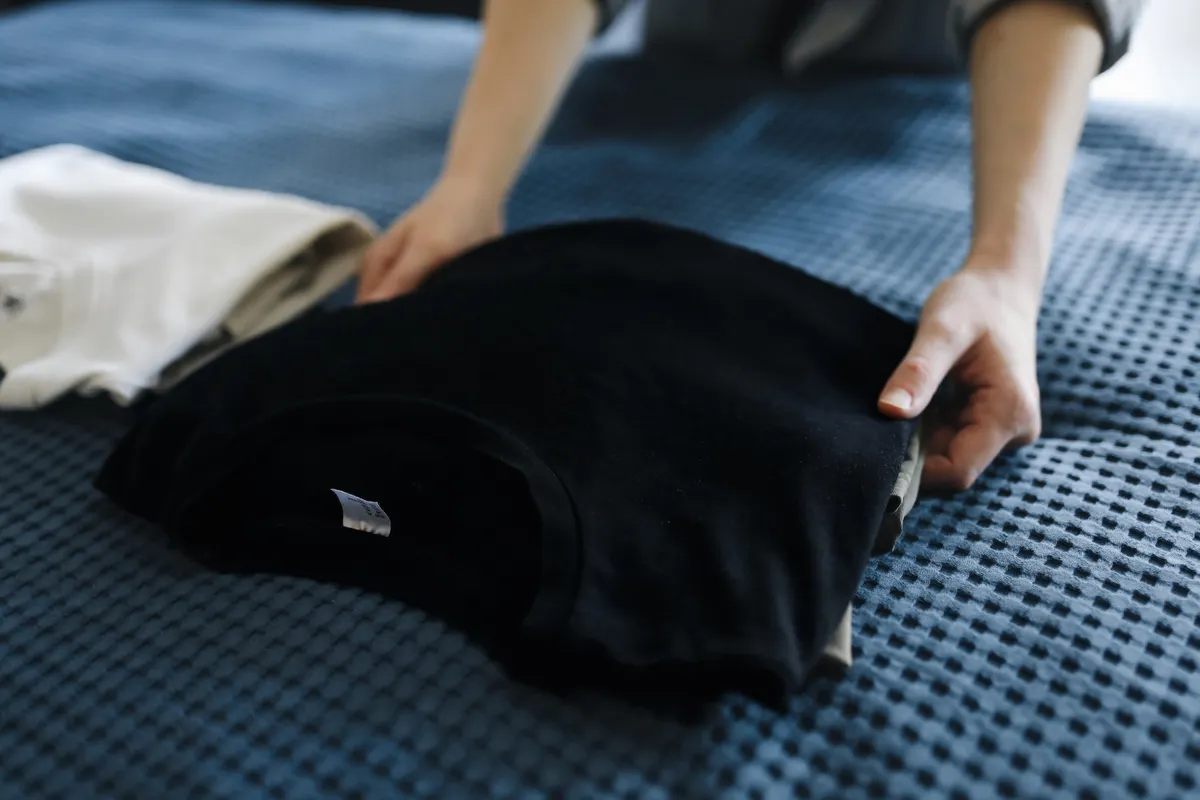
Skill-building is usually funded through Capacity Building supports rather than Core. It can include practising a cleaning routine, learning to use a washing machine, or planning shopping and meals. If you live in shared supported accommodation, the NDIA’s guide to supported independent living (SIL) lists building skills in cooking, cleaning and developing a routine as part of SIL supports.
At Skillwise, our household tasks and domestic assistance service covers cleaning, laundry, rubbish removal and basic organisation in homes across Rooty Hill, Blacktown, Mount Druitt and nearby suburbs. If you’d like to build your own skills, our daily living and life skills support covers household management, cooking, budgeting and travel skills. We also offer personal care and daily support and supported independent living.
Frequently asked questions
Will the NDIS pay for cleaning products?
No. Groceries, including cleaning and household products, are on the NDIA’s list of supports that are not NDIS supports. Your funding can pay for the worker’s time, but products are an everyday living cost.
Does the NDIS cover end-of-lease or bond cleaning?
No. Exit cleaning, pest control, bond and general damage repairs under a tenancy agreement are listed as costs the NDIS does not fund.
Can the NDIS pay for lawn mowing or gardening?
It can, when it meets the same tests. House or yard maintenance is part of the household tasks category, and item 01_019_0120_1_1 has a national price limit of $59.01 per hour in 2026-27.
Can I use a regular cleaner who isn’t NDIS registered?
Usually yes, if your plan is self-managed or plan-managed. If your plan is NDIA-managed, you must use a registered provider.
How many hours of cleaning will the NDIS fund?
There is no set number. The NDIA decides based on your disability support needs, your living situation, the informal support around you and your evidence. That’s why a clear diary and an allied health report make a difference.
Talk to Skillwise about household support
If you’re not sure whether your plan covers cleaning, or you’d like help with household tasks in Western Sydney, we’re happy to talk it through. Call Skillwise Disability Services on 0474 151 264, email info@skillwisedisability.com.au, or send us a message. You can also learn more about our team. We’re based at 93 Beames Avenue, Rooty Hill NSW 2766.
This article is general information, not advice about your individual plan. NDIS rules and prices change, so always check the latest information at ndis.gov.au or call the NDIA on 1800 800 110.
Support near you in Western Sydney
Skillwise is based in Rooty Hill and supports NDIS participants across the region. Read about our NDIS support in Blacktown, NDIS support in Mount Druitt, NDIS support in Rooty Hill and NDIS support in St Marys, or see all the areas we cover.